
A good NEET score improves your chances of admission. But the counselling process ultimately determines which college and course you will join.

The Reserve Bank of India (RBI) is widely expected to keep its benchmark repo rate unchanged in the August monetary policy review, with economists citing elevated inflation risks and the pending closure of the FCNR(B) deposit scheme as key factors. Most anticipate a 'Neutral' policy stance but with a hawkish tone due to geopolitical tensions, high crude oil prices, and an uneven monsoon.

The National Payments Corporation of India (NPCI) stated that the Merchant Discount Rate (MDR) "is distributed only amongst the UPI ecosystem, to further invest into infrastructure resilience, innovation, cybersecurity (protecting the UPI infrastructure with banks and non-banks) and customer service."

The US State Department has paused visa appointments worldwide to conduct a 'global training initiative' for consular officers, aiming to ensure applicants are not likely to become a 'public charge' and are comprehensively evaluated, intensifying President Donald Trump's immigration crackdown.

The government is introducing a 0.4% Merchant Discount Rate (MDR) on UPI person-to-merchant payments above Rs 2,000, effective October 15. This move ends the zero-MDR regime, aiming to fund UPI infrastructure and sustainability, as the previous government subsidy was insufficient to cover operational costs. Payments between individuals and most everyday merchant transactions will remain free.

A stake sale by Tata Trusts will help it to have a larger corpus that could be used to balance the unequal dividends that flow from Tata Sons on an ongoing basis.

RBI Governor Sanjay Malhotra stated that the central bank is closely monitoring whether the supply shock from the West Asia conflict will lead to a generalised price rise, potentially necessitating monetary policy action.

Economists highlight that resolving domestic policy bottlenecks, particularly through land reforms and improving the ease of doing business, will be critical for Prime Minister Narendra Modi's 'next-generation reforms' and India's economic transformation towards its 'Viksit Bharat' vision for 2047.

Analysts predict that crude oil prices, geopolitical tensions in West Asia, and upcoming inflation data will be the primary drivers of the Indian stock market this week, alongside foreign investor activity and domestic quarterly earnings.

Gold futures saw a significant rise for the second consecutive day, driven by strong overseas market rallies, increased safe-haven demand due to geopolitical uncertainties, and a weaker US dollar. This surge coincided with the Reserve Bank of India's decision to maintain its repo rate, reflecting a focus on growth amidst global inflation concerns and easing oil prices.

India and China are in what experts call 'a cooperation-versus-competition situation'.

Actor-turned-politician Kangana Ranaut has publicly endorsed Isha Koppikar's 'andhbhakt' declaration, asserting that such devotion is rooted in love for the country.

'The ethanol blended with petrol programme should not be halted or reconsidered.' 'India is not experiencing a structural sugar shortage, and the ethanol blending roadmap does not compete with food security or drive domestic price increases.'

If you do not insulate your retirement corpus from the true cost of modern critical care, you don't have a retirement plan -- you have a fragile strategy waiting for an expensive medical emergency to break it

India's foreign exchange reserves saw a substantial increase of USD 9.063 billion, reaching USD 697.121 billion for the week ended April 3, 2026, according to the Reserve Bank of India (RBI). This surge follows a previous week's decline and brings the reserves closer to their all-time high.

China sailed through the crisis in the Strait of Hormuz relatively unscathed even as the impact of its steps shielded other consuming nations from having to pay high crude oil prices.

Gold and silver are expected to remain volatile with a corrective bias as investors assess the latest flare-up in the US-Iran conflict, movements in crude oil prices, and inflation data, which could reshape expectations for global interest rates, according to analysts.

The Supreme Court on Wednesday came down heavily on the Indian Coast Guard (ICG) for not granting permanent commission to a female officer, saying "we will not allow women officers to be humiliated".

Fitch Ratings has affirmed India's sovereign credit rating at 'BBB-' with a stable outlook, acknowledging robust growth prospects and strong external finances. However, the agency highlighted concerns over elevated government debt, lagging structural metrics, and potential fiscal spending pressures due to rising youth unemployment.
Analysts predict that developments in West Asia, their impact on crude oil prices, and the trading activity of foreign institutional investors (FIIs) will be crucial factors influencing the Indian stock market this week.

US Federal Reserve Chairman Kevin Warsh has picked former RBI governor Raghuram Rajan, Harvard University economics Professor Raj Chetty and Microsoft XBOX CEO Asha Sharma to be part of task forces constituted to examine the central bank's approach to monetary policy and propose transformational changes.
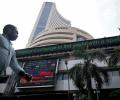
Indian benchmark indices, Sensex and Nifty, saw early gains, primarily driven by IT stocks, amidst expectations of a less aggressive monetary policy from the US Federal Reserve following softer inflation data. Global market trends and upcoming Q1 results are also influencing investor sentiment. Track Sensex, Nifty on july 16.

Under attack over Janardan Dwivedi's pitch against reservation on caste lines, the Congress and the government on Wednesday distanced themselves from the senior leader's remarks, saying it was his "personal" view and they support, adhere and subscribe to the existing policy.

The Reserve Bank of India (RBI) has issued amended directions for bank boards, effective October 1, 2026, to rationalise agenda items and enable more focused engagement on strategy and risk governance, while explicitly defining matters reserved for board approval and periodically reviewing delegated powers.

India's foreign exchange reserves decreased by USD 10.288 billion to USD 688.058 billion during the week ending March 27, according to the Reserve Bank of India (RBI). This decline follows a previous decrease and comes after the reserves reached an all-time high in February.

'You have to get private investment to somewhere between 35% to 36% of GDP. It is hovering about 30%-31%.'

Beijing has been wary of Sanae Takaichi's efforts to boost Japan's military profile since taking office six months ago, points out Dr Rajaram Panda.

India's largest retirement fund manager, the Employees' Provident Fund Organisation (EPFO), is enhancing its investment governance and fund management practices, following the Reserve Bank of India's recommendations.

Phishing sites mimicked SBI, ICICI Bank and Axis Bank to steal card details and OTPs.

Indian stock market indices closed on a mixed note, with the Sensex gaining 374 points driven by buying in Reliance Industries and ICICI Bank, while the Nifty remained flat. This divergence is attributed to a new Closing Auction Session (CAS) mechanism introduced by stock exchanges, impacting market liquidity and price discovery.

The Indian stock market is poised for a volatile week, influenced by the Reserve Bank of India's monetary policy decision, crucial global macroeconomic data, and the escalating geopolitical tensions in West Asia, according to market analysts.

Analysts predict that the Reserve Bank of India's interest rate decision, the evolving situation in West Asia involving the US-Iran conflict, and crude oil prices will be the primary factors influencing investor sentiment in the Indian stock market this week.

Asserting that Aligarh Muslim University is not a minority institution, Rashtriya Swayamsevak Sangh on Saturday said the varsity is committing a "big crime" by not implementing the policy of reservation for SCs, STs and OBCs.

The Unified Payments Interface (UPI) has completed a decade since its launch, becoming the backbone of India's digital payments ecosystem. It has seen exponential growth in transaction volume and value, expanding financial inclusion and setting a global benchmark for real-time payments.

India's retail inflation rose to 4.38 per cent in June, driven primarily by costlier food items, pushing it above the Reserve Bank of India's median target of 4 per cent for the first time under the new series.

The article details instances where the Narendra Modi government has yielded to public and political pressure since 2014, leading to policy reversals and ministerial resignations. It highlights the recent resignation of Education Minister Dharmendra Pradhan over the NEET paper leak, alongside past events like the withdrawal of land acquisition amendments, M.J. Akbar's resignation, the repeal of farm laws, and other policy retreats.

Analysts predict that inflation data, the US Federal Reserve's interest rate decision, and crude oil price trends will be the primary factors influencing the movement of Indian stock markets. Geopolitical developments, particularly the US-Iran deal, and foreign investor activity will also play a crucial role.

Benchmark lending rates unchanged with repo rate at 5.25%

The Rapid Action Force (RAF) has initiated an inquiry into allegations of its personnel using disproportionate force and firing pellet guns during recent student protests in Delhi, following social media footage and reports of injuries.

'Every period of excessive optimism eventually gives way to a correction, while periods of extreme pessimism often create the best investment opportunities.'
